Facts on this page have not been independently verified against primary sources yet. Not indexed, not in sitemap, not for public sharing. Visible to anyone with the URL, but search engines have been told to skip it.
EUG
University / Campus events
UO arts, lectures, museums, sports, and student life
450 ft
This page is a growing area guide built from public calendars, venue feeds, and community submissions.
› Read more about University / Campus
University / Campus is part of the first Eugene-area map for This Week in Eugene. Events here come from structured public sources first, then from verified venue pages and community submissions as the source list grows.
The first job is accuracy: dates, times, venues, prices, and source links. Richer neighborhood notes come after the feed pipeline is stable and locals have helped correct the obvious gaps.
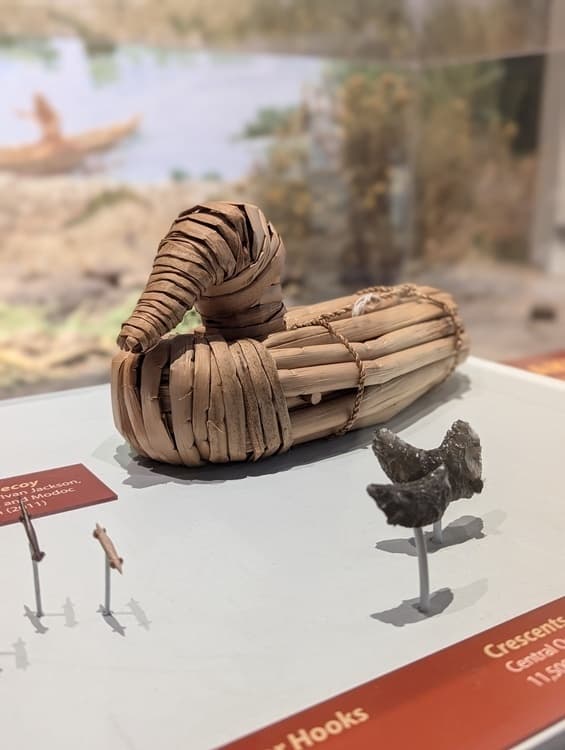
Delve into Oregon’s story, from the archaeology of the First Americans to the dynamic cultures of today’s Tribes. Combining interactive displays with world-class anthropological collections, Oregon—Where Past is Present shares 14,000 years of Oregon stories, and invites you to tell your own. Explore the galleries, try your hand at ancient weaving styles, test your skills as an archaeologist, and much more Included with regular admission; free for MNCH members and UO ID card holders. Show your Oregon Trail or other EBT card for an admission discount.
10:00 AM - 8:00 PMUniversity / Campus·Museum of Natural and Cultural History
Gateway to Himalayan Art is a special exhibition that introduces the main forms, concepts, meanings, and living traditions of Himalayan art. The exhibition features sublime religious art created from the 13th through the 21st centuries in Tibet, Nepal, China, and Mongolia, drawn from the permanent collection of the Rubin Museum of Himalayan Art, which organized the exhibition. At the start of the exhibition, a multimedia map orients visitors to the greater Himalayan region, which encompasses Indian, Nepalese, Bhutanese, and Tibetan cultures as well as interrelated Mongolian and Chinese traditions. Gateway to Himalayan Art invites exploration of these diverse cultural spheres through exemplary objects presented in three thematic sections: Symbols and Meanings, Materials and Technologies, and Living Practices. Traditional scroll paintings (thangkas), sculptures in various media, and ritual items comprise the diverse range of objects on view. Exhibition Thematic Sections The Symbols and Meanings section juxtaposes paintings and sculptures to introduce the iconography of Buddhas and bodhisattvas; Tantric, female, and wrathful deities; Hindu gods and goddesses; and spiritually accomplished humans such as arhats, Mahasiddhas, and great religious teachers (lamas). The Materials and Technologies section features in-depth displays detailing the making of a Tibetan thangka painting, the process of Nepalese lost-wax metal casting, the creation of clay, wood, and stone sculptures, and the fabrication of manuscripts and printed texts and images. It is augmented with artists’ tools and materials, and videos. The section on Living Practices uses paintings, sculptures, ritual implements, and medical instruments to explore sacred rituals undertaken by Buddhists to accrue spiritual merit and achieve secular aims. It also introduces traditions of narrative and instructive Buddhist paintings and concludes with an elaborate wooden shrine housing sacred images, texts, and ritual objects to encourage visitors to consider the original context of the kinds of devotional art featured in the exhibition. This traveling exhibition is organized and provided by the Rubin Museum of Himalayan Art and curated by Senior Curator of Himalayan Art Elena Pakhoutova. Gateway to Himalayan Art is an integral component of the Rubin Museum’s Project Himalayan Art, a three-part initiative that also includes the publication Himalayan Art in 108 Objects and a digital platform. Together they provide introductory resources for learning about and teaching Himalayan art. In addition to introducing an astonishing array of beautiful and meaningful works of art, Gateway to Himalayan Art includes informative videos explaining a variety of religious, cultural, and artistic practices, audio recordings from Himalayan communities that highlight living traditions, and opportunities to dive deeper into the rich contextual material available on the Rubin’s integrated digital platform. In conjunction with the JSMA’s presentation of Gateway to Himalayan Art, the Rubin is generously lending two additional global contemporary works by Shraddha Shrestha and Tsherin Sherpa that include elements from traditional Himalayan Buddhist art to welcome visitors in the museum lobby. Gateway to Himalayan Art has already been shown at the Lehigh University Art Galleries in Bethlehem, Pennsylvania, and the McMullen Museum of Art at Boston College in 2023; the Harn Museum of Art at the University of Florida in Gainesville and the Frank Museum of Art at Otterbein University in Westerville, Ohio, in 2024; and the Utah Museum of Fine Arts at the University of Utah in Salt Lake City and the Flaten Art Museum at St. Olaf College in Northfield, Minnesota, in 2025. After it closes at the JSMA, the exhibition will travel to the USC Pacific Asia Museum at the University of Southern California in Pasadena. The Rubin recently transitioned to being a “museum without walls,” sharing its collection and expertise through traveling exhibitions, object loans, grant opportunities, and partnerships with the goal of encouraging understanding and appreciation of Himalayan art worldwide.
For nearly a century, the Jordan Schnitzer Museum of Art has provided students, faculty, and the broader community opportunities to connect with works of art across time periods and cultures. Initially founded in 1933 as an Asian art museum with the generous donation of Gertrude Bass Warner’s collection of over 3,700 works of art, the museum’s collecting interests have since broadened to artworks from around the world that provide even more opportunities for cross-cultural and curricular connections. JSMA began collecting American and regional art in the 1960s, and now stewards work by artists from the United States, Mesoamerica, contemporary Mexico, Cuba, Puerto Rico, and other areas of the Caribbean and across the Americas. With our recent acquisitions, the museum aims to reflect the voices and experiences of diverse audiences and the new and evolving ideas, insights, and conversations presented by artists in work that both shapes and responds to culture. Collecting America: Recent Acquisitions presents a selection of artworks from the museum’s permanent collection that demonstrate our commitment to understandings of American art informed by perspectives from local, national, and internationally recognized artists. Through various materials and practices, the featured artists demonstrate the great diversity of art made in or in response to the United States of America. These works invite viewers to participate in conversations on identity, place, politics, and other issues facing our world today. This exhibition is organized by JSMA executive director Olivia Miller and curators Katie Loney, Danielle Knapp, and Thom Sempere, with graduate student interns Aidyn Dervaes (MA candidate, History of Art and Architecture), Parisa Garazhian (MFA candidate, Studio Art), and Lorna Isaacson (MA candidate, History of Art and Architecture).
Navigating Through Centuries: From Ancient to Global Contemporary in Korean Art
Fine Arts
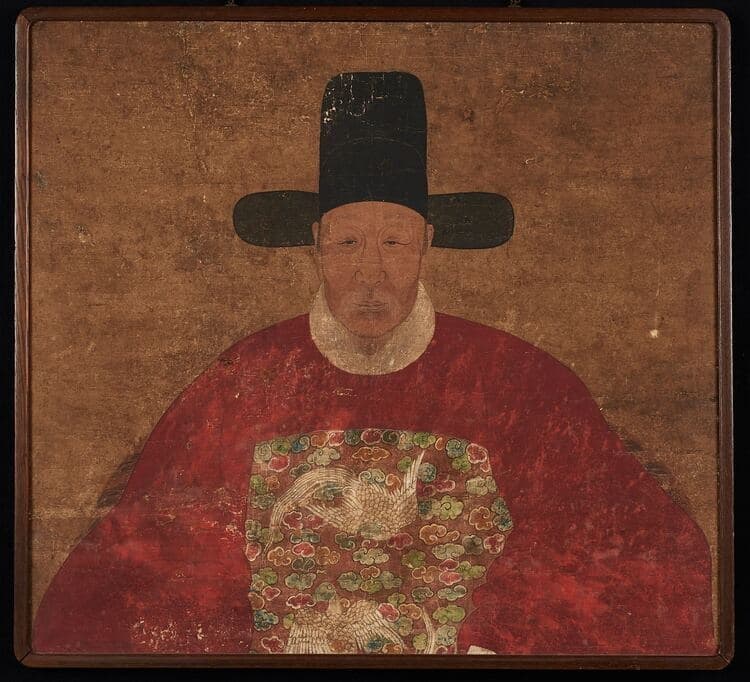
Navigating Through Centuries surveys the complex trajectory of art in Korea, which was significantly impacted by socio-political upheaval and cultural developments from the fifth century to the present. The exhibition is comprised of six chronological thematic sections — from the power and religion of the Three Kingdoms period (57 BCE–668 CE), to the refined aristocratic ideals of the Goryeo (918–1392) and Confucian governance of the Joseon (1392–1910) dynasties, through vestiges of tradition after the Korean War (1950–1953), experimental practices during the modern era, and globalization of contemporary art. Each section examines how aesthetic practices respond to the evolving philosophies, ideologies, critical events, and issues of a specific historical period. The exhibition begins with materials from the Three Kingdoms period in which are embedded political/religious authority and communal rituals, laying the foundation for Korean cultural memory. The Goryeo dynasty section highlights the refined aesthetics and Buddhist motifs that reflect aristocratic ideals and literati culture, while also indicating Korea’s participation in East Asian cultural exchange. The Joseon section showcases art that embodies the Confucian literati values that fundamentally shaped the moral order, governance, and cultural life of the period. The modern and contemporary sections focus on twentieth-century art, which has continually questioned, responded to, and been shaped by the last tumultuous century of Korean history. The first postwar section features art that portrays the remnants of indigenous culture in the aftermath of the Korean War. The next section presents experimental works by artists who challenged the canon of art by blurring boundaries of cultures, genres, and mediums. The final section showcases global contemporary art by diasporic creators, many of whom have played central roles in integrating Korean art into the international mainstream. Navigating Through Centuries narrates the conflicted yet intertwined relationships between art and culture, individuals and communities, and socio-politics and history, inviting audiences to consider the broad history of Korea through the lens of art. The exhibition was curated by Soojin Jeong, 2023–2026 Post-Graduate Curatorial Fellow in East Asian Art, as well as Heejung Chang, 2025–2026 JSMA/Korea Foundation Global Challengers Museum Intern.
Delve into Oregon’s story, from the archaeology of the First Americans to the dynamic cultures of today’s Tribes. Combining interactive displays with world-class anthropological collections, Oregon—Where Past is Present shares 14,000 years of Oregon stories, and invites you to tell your own. Explore the galleries, try your hand at ancient weaving styles, test your skills as an archaeologist, and much more Included with regular admission; free for MNCH members and UO ID card holders. Show your Oregon Trail or other EBT card for an admission discount.
10:00 AM - 5:00 PMUniversity / Campus·Museum of Natural and Cultural History
For nearly a century, the Jordan Schnitzer Museum of Art has provided students, faculty, and the broader community opportunities to connect with works of art across time periods and cultures. Initially founded in 1933 as an Asian art museum with the generous donation of Gertrude Bass Warner’s collection of over 3,700 works of art, the museum’s collecting interests have since broadened to artworks from around the world that provide even more opportunities for cross-cultural and curricular connections. JSMA began collecting American and regional art in the 1960s, and now stewards work by artists from the United States, Mesoamerica, contemporary Mexico, Cuba, Puerto Rico, and other areas of the Caribbean and across the Americas. With our recent acquisitions, the museum aims to reflect the voices and experiences of diverse audiences and the new and evolving ideas, insights, and conversations presented by artists in work that both shapes and responds to culture. Collecting America: Recent Acquisitions presents a selection of artworks from the museum’s permanent collection that demonstrate our commitment to understandings of American art informed by perspectives from local, national, and internationally recognized artists. Through various materials and practices, the featured artists demonstrate the great diversity of art made in or in response to the United States of America. These works invite viewers to participate in conversations on identity, place, politics, and other issues facing our world today. This exhibition is organized by JSMA executive director Olivia Miller and curators Katie Loney, Danielle Knapp, and Thom Sempere, with graduate student interns Aidyn Dervaes (MA candidate, History of Art and Architecture), Parisa Garazhian (MFA candidate, Studio Art), and Lorna Isaacson (MA candidate, History of Art and Architecture).
Navigating Through Centuries: From Ancient to Global Contemporary in Korean Art
Fine Arts
Navigating Through Centuries surveys the complex trajectory of art in Korea, which was significantly impacted by socio-political upheaval and cultural developments from the fifth century to the present. The exhibition is comprised of six chronological thematic sections — from the power and religion of the Three Kingdoms period (57 BCE–668 CE), to the refined aristocratic ideals of the Goryeo (918–1392) and Confucian governance of the Joseon (1392–1910) dynasties, through vestiges of tradition after the Korean War (1950–1953), experimental practices during the modern era, and globalization of contemporary art. Each section examines how aesthetic practices respond to the evolving philosophies, ideologies, critical events, and issues of a specific historical period. The exhibition begins with materials from the Three Kingdoms period in which are embedded political/religious authority and communal rituals, laying the foundation for Korean cultural memory. The Goryeo dynasty section highlights the refined aesthetics and Buddhist motifs that reflect aristocratic ideals and literati culture, while also indicating Korea’s participation in East Asian cultural exchange. The Joseon section showcases art that embodies the Confucian literati values that fundamentally shaped the moral order, governance, and cultural life of the period. The modern and contemporary sections focus on twentieth-century art, which has continually questioned, responded to, and been shaped by the last tumultuous century of Korean history. The first postwar section features art that portrays the remnants of indigenous culture in the aftermath of the Korean War. The next section presents experimental works by artists who challenged the canon of art by blurring boundaries of cultures, genres, and mediums. The final section showcases global contemporary art by diasporic creators, many of whom have played central roles in integrating Korean art into the international mainstream. Navigating Through Centuries narrates the conflicted yet intertwined relationships between art and culture, individuals and communities, and socio-politics and history, inviting audiences to consider the broad history of Korea through the lens of art. The exhibition was curated by Soojin Jeong, 2023–2026 Post-Graduate Curatorial Fellow in East Asian Art, as well as Heejung Chang, 2025–2026 JSMA/Korea Foundation Global Challengers Museum Intern.
Gateway to Himalayan Art is a special exhibition that introduces the main forms, concepts, meanings, and living traditions of Himalayan art. The exhibition features sublime religious art created from the 13th through the 21st centuries in Tibet, Nepal, China, and Mongolia, drawn from the permanent collection of the Rubin Museum of Himalayan Art, which organized the exhibition. At the start of the exhibition, a multimedia map orients visitors to the greater Himalayan region, which encompasses Indian, Nepalese, Bhutanese, and Tibetan cultures as well as interrelated Mongolian and Chinese traditions. Gateway to Himalayan Art invites exploration of these diverse cultural spheres through exemplary objects presented in three thematic sections: Symbols and Meanings, Materials and Technologies, and Living Practices. Traditional scroll paintings (thangkas), sculptures in various media, and ritual items comprise the diverse range of objects on view. Exhibition Thematic Sections The Symbols and Meanings section juxtaposes paintings and sculptures to introduce the iconography of Buddhas and bodhisattvas; Tantric, female, and wrathful deities; Hindu gods and goddesses; and spiritually accomplished humans such as arhats, Mahasiddhas, and great religious teachers (lamas). The Materials and Technologies section features in-depth displays detailing the making of a Tibetan thangka painting, the process of Nepalese lost-wax metal casting, the creation of clay, wood, and stone sculptures, and the fabrication of manuscripts and printed texts and images. It is augmented with artists’ tools and materials, and videos. The section on Living Practices uses paintings, sculptures, ritual implements, and medical instruments to explore sacred rituals undertaken by Buddhists to accrue spiritual merit and achieve secular aims. It also introduces traditions of narrative and instructive Buddhist paintings and concludes with an elaborate wooden shrine housing sacred images, texts, and ritual objects to encourage visitors to consider the original context of the kinds of devotional art featured in the exhibition. This traveling exhibition is organized and provided by the Rubin Museum of Himalayan Art and curated by Senior Curator of Himalayan Art Elena Pakhoutova. Gateway to Himalayan Art is an integral component of the Rubin Museum’s Project Himalayan Art, a three-part initiative that also includes the publication Himalayan Art in 108 Objects and a digital platform. Together they provide introductory resources for learning about and teaching Himalayan art. In addition to introducing an astonishing array of beautiful and meaningful works of art, Gateway to Himalayan Art includes informative videos explaining a variety of religious, cultural, and artistic practices, audio recordings from Himalayan communities that highlight living traditions, and opportunities to dive deeper into the rich contextual material available on the Rubin’s integrated digital platform. In conjunction with the JSMA’s presentation of Gateway to Himalayan Art, the Rubin is generously lending two additional global contemporary works by Shraddha Shrestha and Tsherin Sherpa that include elements from traditional Himalayan Buddhist art to welcome visitors in the museum lobby. Gateway to Himalayan Art has already been shown at the Lehigh University Art Galleries in Bethlehem, Pennsylvania, and the McMullen Museum of Art at Boston College in 2023; the Harn Museum of Art at the University of Florida in Gainesville and the Frank Museum of Art at Otterbein University in Westerville, Ohio, in 2024; and the Utah Museum of Fine Arts at the University of Utah in Salt Lake City and the Flaten Art Museum at St. Olaf College in Northfield, Minnesota, in 2025. After it closes at the JSMA, the exhibition will travel to the USC Pacific Asia Museum at the University of Southern California in Pasadena. The Rubin recently transitioned to being a “museum without walls,” sharing its collection and expertise through traveling exhibitions, object loans, grant opportunities, and partnerships with the goal of encouraging understanding and appreciation of Himalayan art worldwide.
Delve into Oregon’s story, from the archaeology of the First Americans to the dynamic cultures of today’s Tribes. Combining interactive displays with world-class anthropological collections, Oregon—Where Past is Present shares 14,000 years of Oregon stories, and invites you to tell your own. Explore the galleries, try your hand at ancient weaving styles, test your skills as an archaeologist, and much more Included with regular admission; free for MNCH members and UO ID card holders. Show your Oregon Trail or other EBT card for an admission discount.
10:00 AM - 5:00 PMUniversity / Campus·Museum of Natural and Cultural History
Gateway to Himalayan Art is a special exhibition that introduces the main forms, concepts, meanings, and living traditions of Himalayan art. The exhibition features sublime religious art created from the 13th through the 21st centuries in Tibet, Nepal, China, and Mongolia, drawn from the permanent collection of the Rubin Museum of Himalayan Art, which organized the exhibition. At the start of the exhibition, a multimedia map orients visitors to the greater Himalayan region, which encompasses Indian, Nepalese, Bhutanese, and Tibetan cultures as well as interrelated Mongolian and Chinese traditions. Gateway to Himalayan Art invites exploration of these diverse cultural spheres through exemplary objects presented in three thematic sections: Symbols and Meanings, Materials and Technologies, and Living Practices. Traditional scroll paintings (thangkas), sculptures in various media, and ritual items comprise the diverse range of objects on view. Exhibition Thematic Sections The Symbols and Meanings section juxtaposes paintings and sculptures to introduce the iconography of Buddhas and bodhisattvas; Tantric, female, and wrathful deities; Hindu gods and goddesses; and spiritually accomplished humans such as arhats, Mahasiddhas, and great religious teachers (lamas). The Materials and Technologies section features in-depth displays detailing the making of a Tibetan thangka painting, the process of Nepalese lost-wax metal casting, the creation of clay, wood, and stone sculptures, and the fabrication of manuscripts and printed texts and images. It is augmented with artists’ tools and materials, and videos. The section on Living Practices uses paintings, sculptures, ritual implements, and medical instruments to explore sacred rituals undertaken by Buddhists to accrue spiritual merit and achieve secular aims. It also introduces traditions of narrative and instructive Buddhist paintings and concludes with an elaborate wooden shrine housing sacred images, texts, and ritual objects to encourage visitors to consider the original context of the kinds of devotional art featured in the exhibition. This traveling exhibition is organized and provided by the Rubin Museum of Himalayan Art and curated by Senior Curator of Himalayan Art Elena Pakhoutova. Gateway to Himalayan Art is an integral component of the Rubin Museum’s Project Himalayan Art, a three-part initiative that also includes the publication Himalayan Art in 108 Objects and a digital platform. Together they provide introductory resources for learning about and teaching Himalayan art. In addition to introducing an astonishing array of beautiful and meaningful works of art, Gateway to Himalayan Art includes informative videos explaining a variety of religious, cultural, and artistic practices, audio recordings from Himalayan communities that highlight living traditions, and opportunities to dive deeper into the rich contextual material available on the Rubin’s integrated digital platform. In conjunction with the JSMA’s presentation of Gateway to Himalayan Art, the Rubin is generously lending two additional global contemporary works by Shraddha Shrestha and Tsherin Sherpa that include elements from traditional Himalayan Buddhist art to welcome visitors in the museum lobby. Gateway to Himalayan Art has already been shown at the Lehigh University Art Galleries in Bethlehem, Pennsylvania, and the McMullen Museum of Art at Boston College in 2023; the Harn Museum of Art at the University of Florida in Gainesville and the Frank Museum of Art at Otterbein University in Westerville, Ohio, in 2024; and the Utah Museum of Fine Arts at the University of Utah in Salt Lake City and the Flaten Art Museum at St. Olaf College in Northfield, Minnesota, in 2025. After it closes at the JSMA, the exhibition will travel to the USC Pacific Asia Museum at the University of Southern California in Pasadena. The Rubin recently transitioned to being a “museum without walls,” sharing its collection and expertise through traveling exhibitions, object loans, grant opportunities, and partnerships with the goal of encouraging understanding and appreciation of Himalayan art worldwide.
→Use this page when you want events grouped by place instead of one giant calendar.
→Parents, students, music fans, visitors, and organizers should all be able to scan quickly once enough events are flowing.
→If an event is missing or the venue looks wrong, submit a correction from the event page once the public workflow is live.
Worth knowing
·Area labels are intentionally broad at launch. Some sources only provide city-level location data.
·Source links matter. Every event should point back to the original calendar, venue, or organizer.
·This page is draft/noindex until the local notes are verified beyond the initial source feed.
Want a Thursday heads-up?
One email Thursday morning with what's coming up in University / Campus and nearby Eugene-area listings. No spam, no ads.
About University / Campus
› How are University / Campus events collected?
The first pass favors public calendars, official feeds, venue APIs, and structured event pages. Community submissions are queued for review before publication.
› Can locals help update this area page?
Yes. The goal is a source-transparent calendar locals can help correct, not a closed editorial list.
› Why are some events listed as Eugene instead of a neighborhood?
Many feeds publish only city-level location data. The venue registry improves this over time by resolving known venues into neighborhoods and nearby communities.